
Stretching Exercises for Karate: The Complete Guide for Flexibility, Speed & Injury Prevention



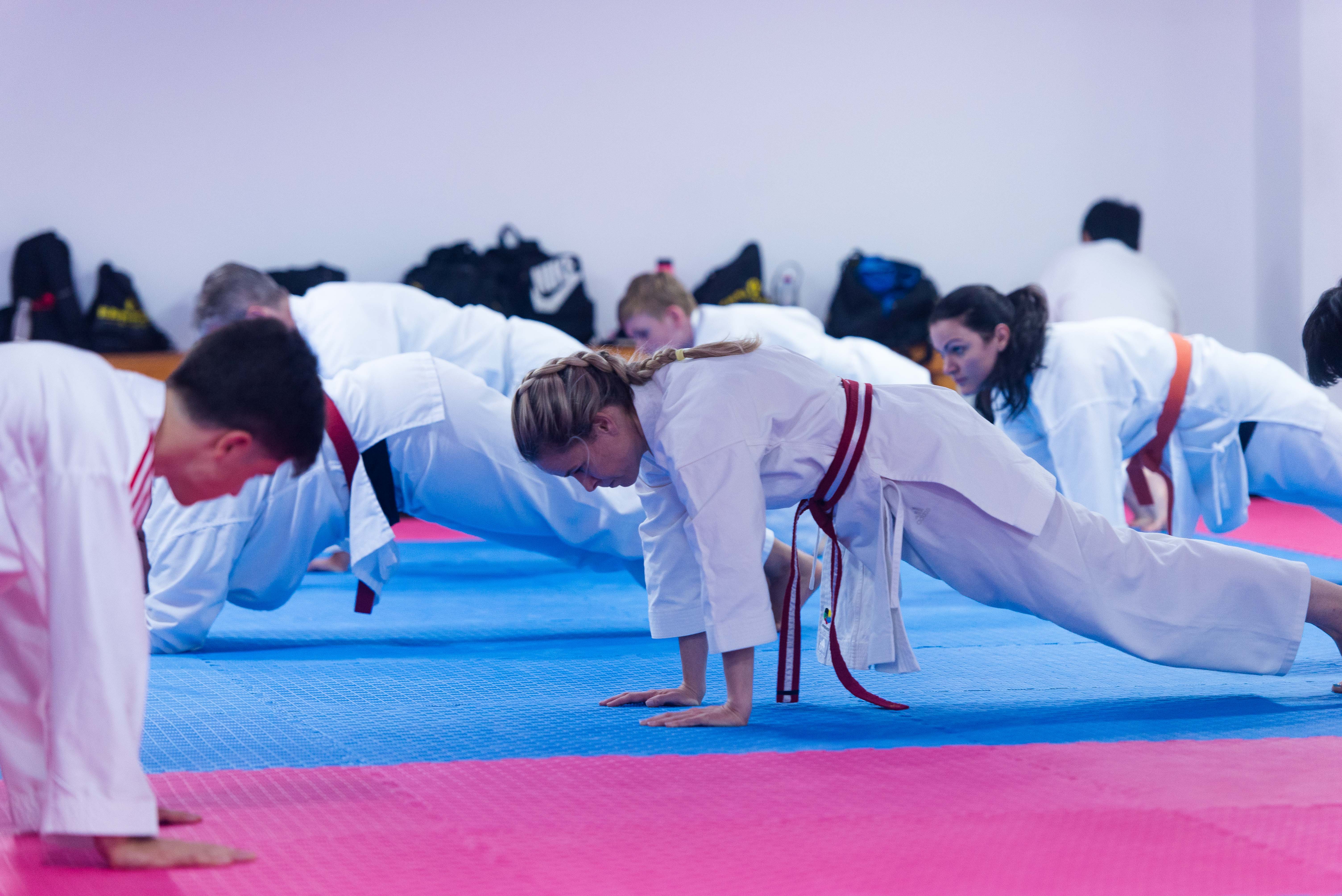
Flexibility is one of the most important components of Karate training. Whether you're practicing high kicks, fast footwork, or deep stances, your body needs mobility, strength, and proper range of motion. Stretching is essential for every karateka who wants to improve performance, prevent injuries, and develop powerful, fluid movements.
This complete guide covers the best stretching exercises for Karate, step-by-step instructions, benefits, safety tips, and a full stretching routine.
Why Stretching Is Important for Karate
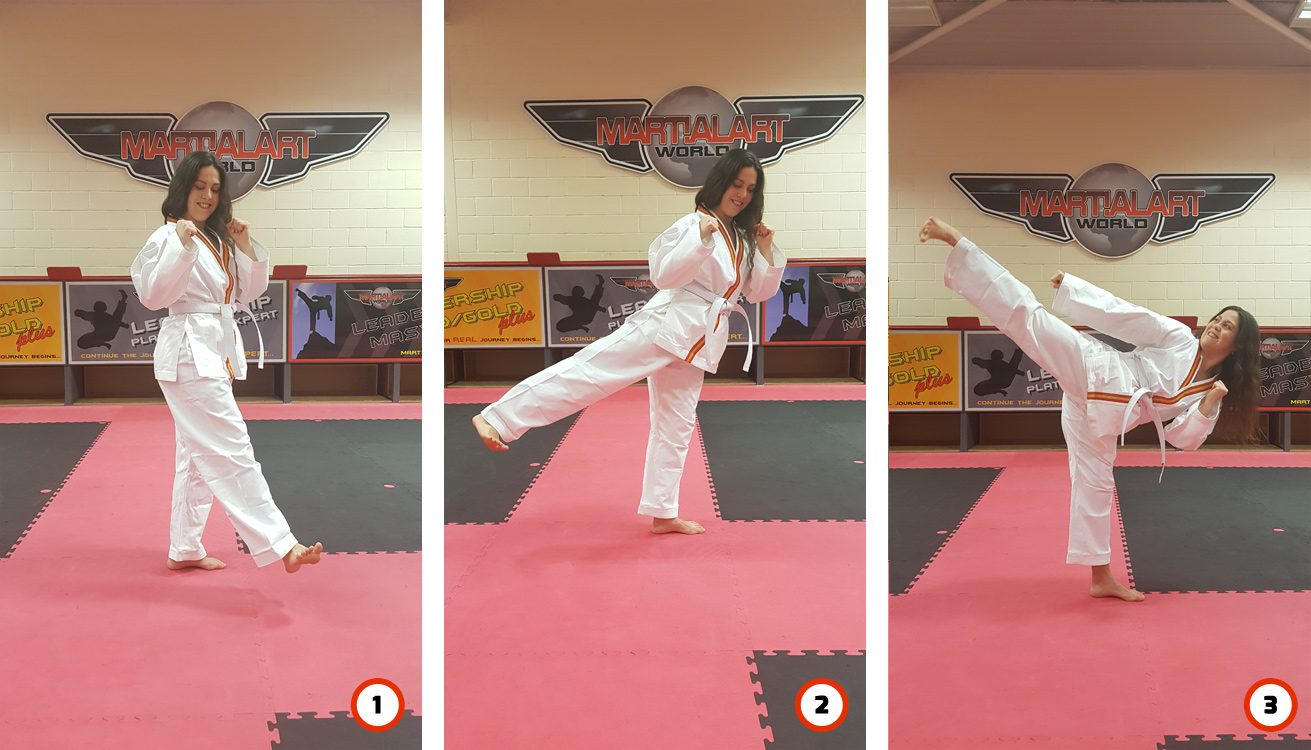

Karate requires:
High kicks
Deep stances
Fast transitions
Powerful hip rotation
Dynamic movement
Without proper flexibility, these techniques feel stiff, slow, or painful.
Benefits of Stretching for Karateka
Reduces risk of muscle injury
Improves kicking height and speed
Enhances balance and control
Boosts mobility in hips and legs
Improves stance depth and stability
Helps maintain proper technique
Reduces post-training soreness
A flexible body moves faster, hits harder, and performs with better efficiency.
Types of Stretching Needed in Karate
Karate uses three main stretching categories:
Dynamic Stretching – Warm-up movements before training
Static Stretching – Deep holds after training
PNF Stretching – Advanced stretching for maximum flexibility
Each type supports different aspects of your Karate performance.
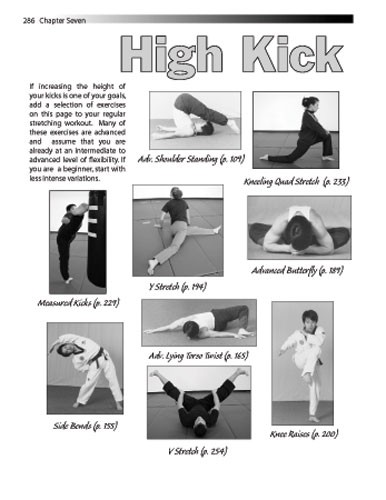
Best Stretching Exercises for Karate
Below is a complete list of the most effective stretching drills designed specifically for karatekas.
1. Leg Swing Stretch (Dynamic)
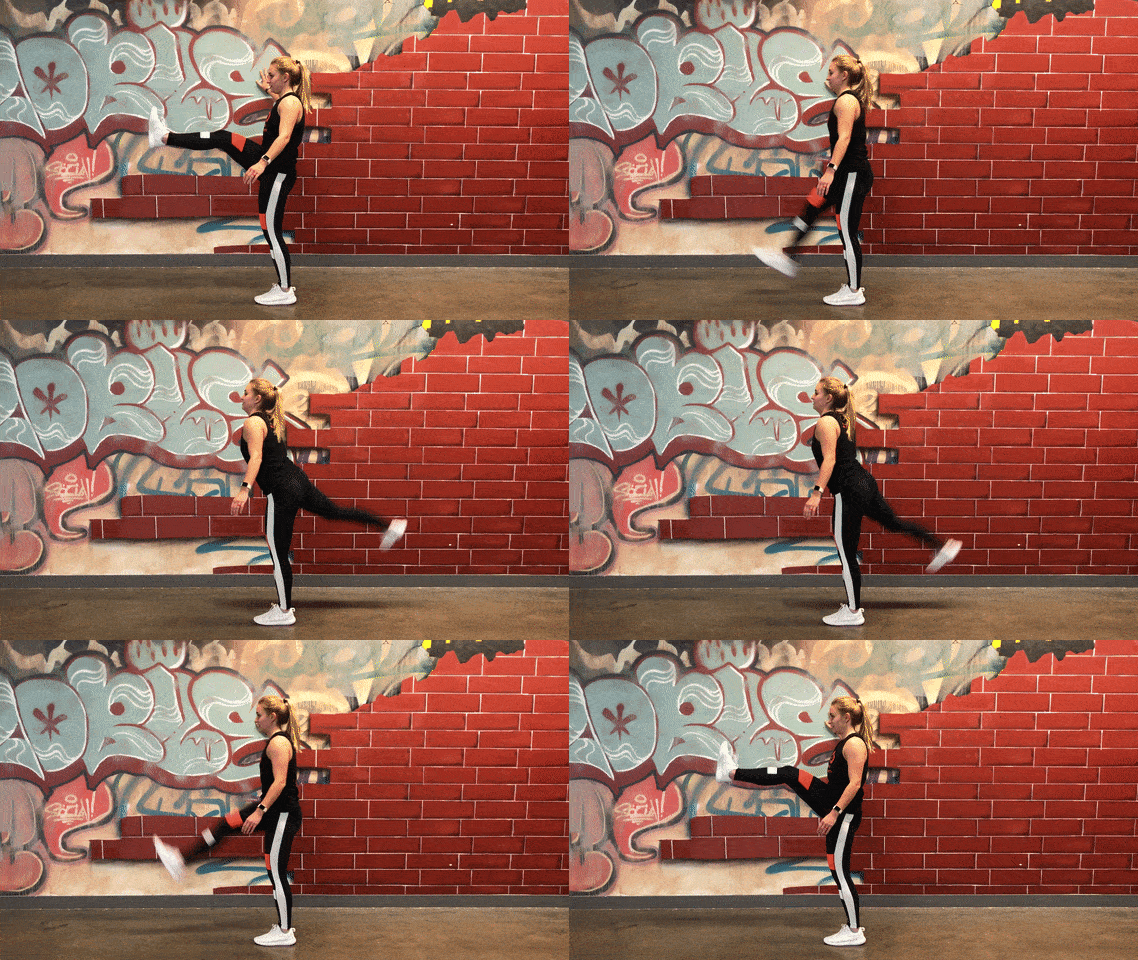
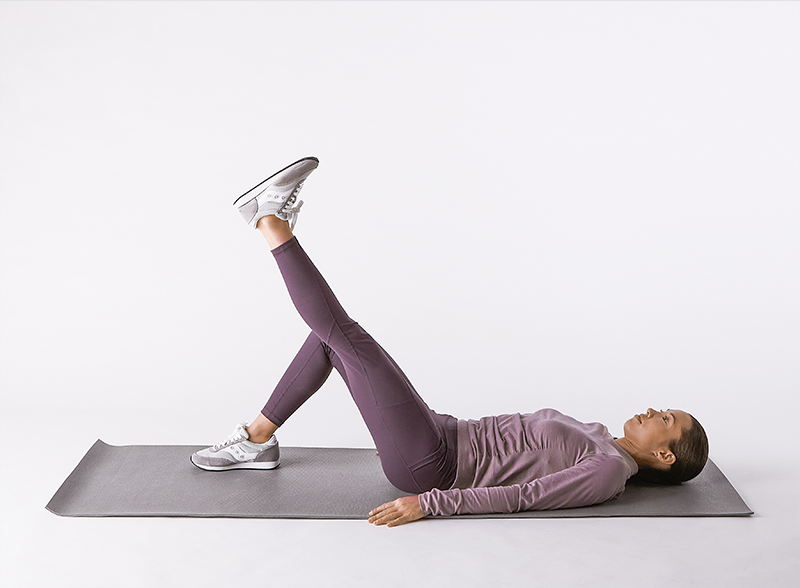
Leg swings warm up the hamstrings, hip flexors, and glutes.
How to Perform
Stand straight holding a wall or partner
Swing one leg forward and backward
Keep the core tight
Repeat 15–20 swings per leg
Benefits
Prepares legs for high kicks
Increases range of motion
Boosts balance and control
2. Hip Circles (Dynamic)


Karate kicks require strong and open hip joints.
How to Perform
Stand with feet shoulder-width
Rotate your hips clockwise 15 times
Switch directions
Benefits
Opens hip joints
Reduces tightness
Prevents groin strain
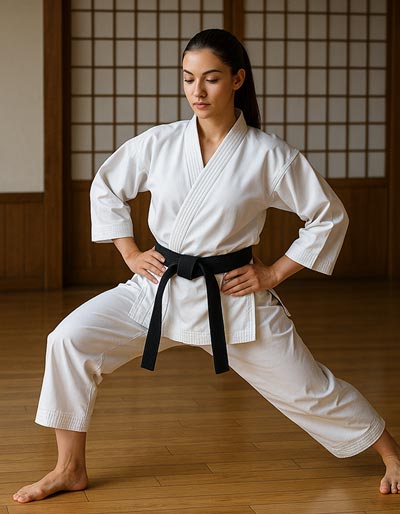
3. Deep Front Stance Stretch (Zenkutsu Dachi Stretch)
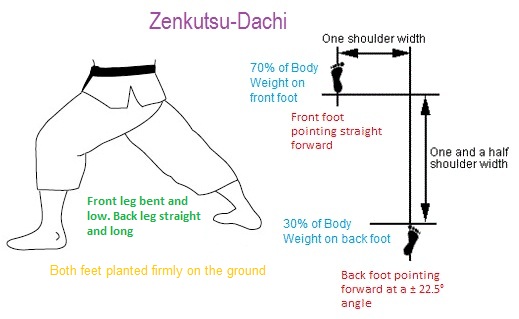

This stretch improves lower body strength and flexibility.
How to Perform
Step forward into a deep stance
Keep front knee bent
Keep back leg straight
Hold 20–30 seconds
Switch legs
Benefits
Improves stance depth
Strengthens thigh muscles
Opens the hip flexors
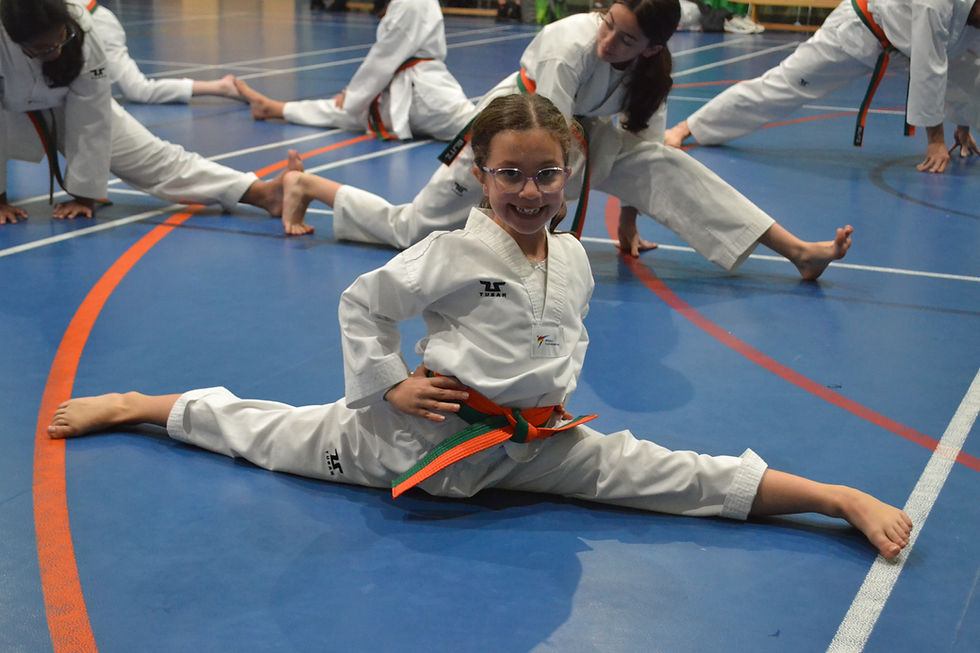
4. Side Split Stretch (Kiba Dachi Stretch)
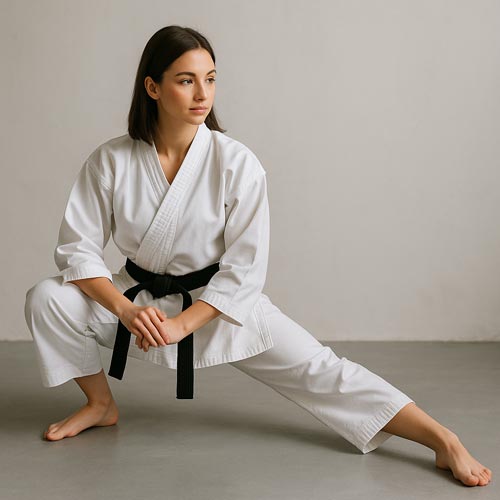
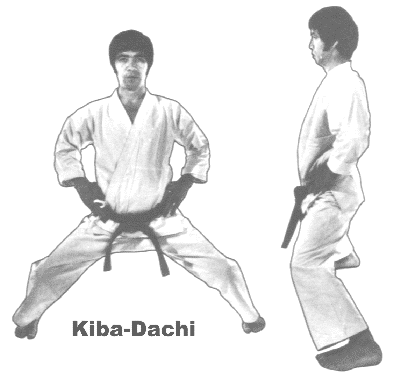
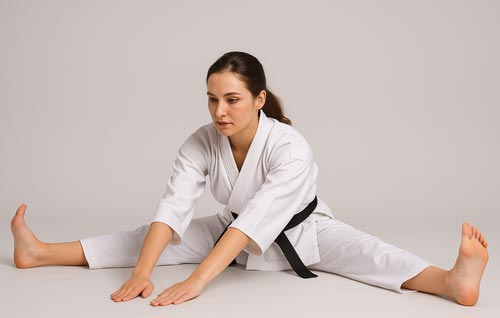
A powerful stretch for kicks like Yoko Geri and Mawashi Geri.
How to Perform
Spread legs wide
Lower hips slowly
Hold 20–40 seconds
Benefits
Increases lateral flexibility
Improves side kick height
Strengthens groin and inner thighs
5. Butterfly Stretch
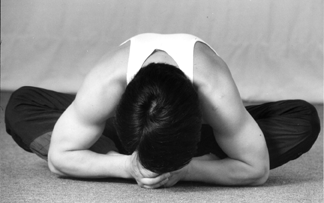
This classic stretch is essential for groin and hip flexibility.
How to Perform
Sit on floor
Bring feet together
Push knees toward ground gently
Hold 30–45 seconds
Benefits
Opens hips
Reduces groin tightness
Helps improve kicking form
6. Hamstring Stretch (Seated)
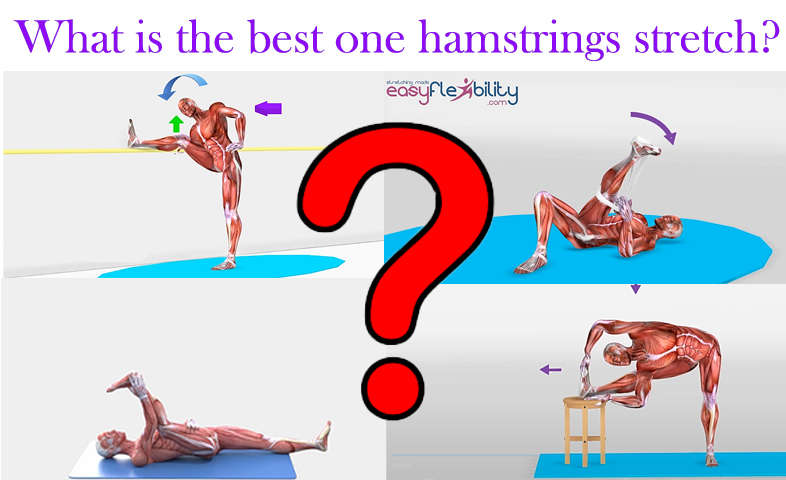
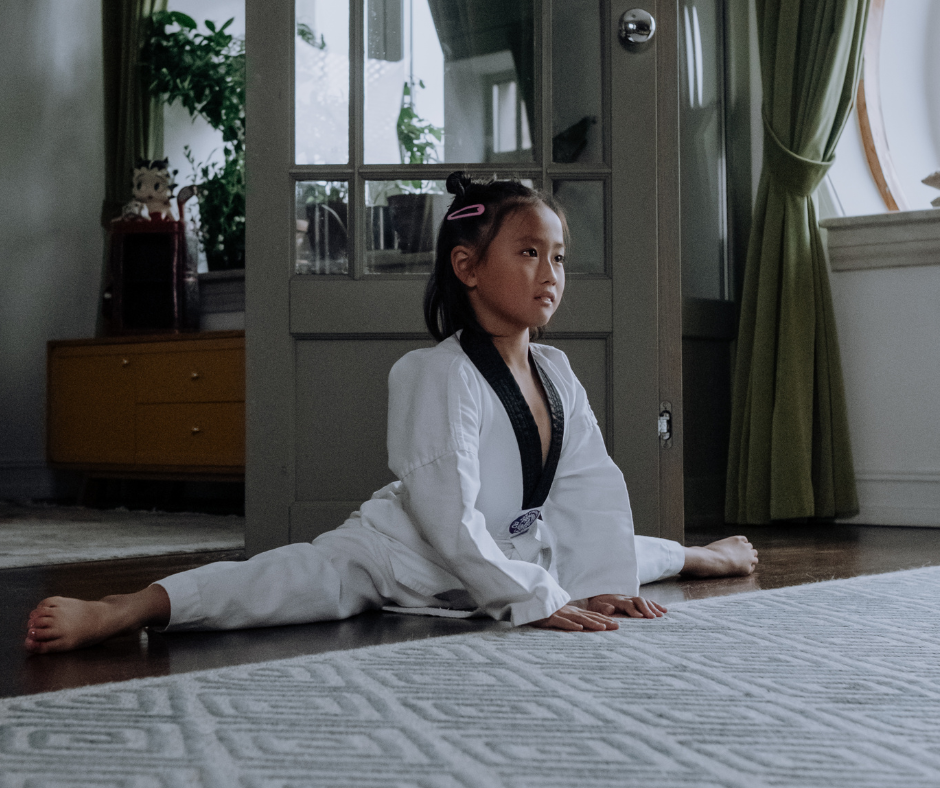
Hamstring flexibility is key for higher kicks.
How to Perform
Sit with one leg straight
Reach for your toes
Hold 30–40 seconds
Switch legs
Benefits
Improves front kicks
Enhances leg control
Reduces strain in lower back
7. Calf Stretch (Against Wall)


A simple yet important stretch for explosive movement.
How to Perform
Stand facing a wall
Step one foot back
Press heel into floor
Hold 20–30 seconds
Benefits
Enhances footwork
Improves stance stability
Prevents Achilles strain
8. Hip Flexor Stretch (Lunge Stretch)
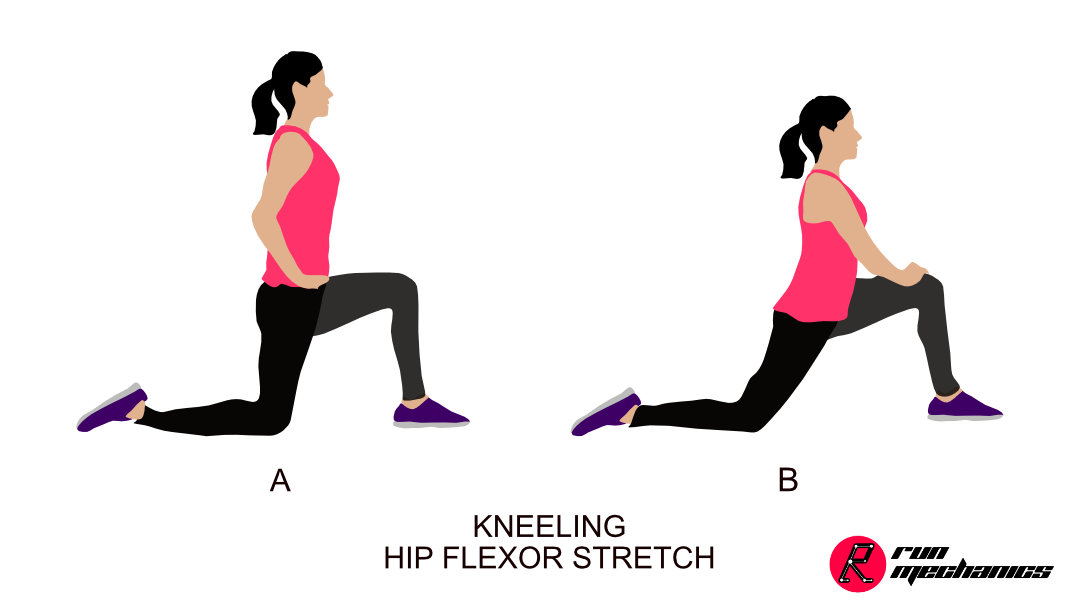
Great for high kicks and posture.
How to Perform
Take a deep lunge
Keep back knee on floor
Lean forward
Hold 30 seconds
Benefits
Releases hip tension
Improves kicking height
Supports stronger rotation
9. Back Stretch (Cat–Cow Stretch)

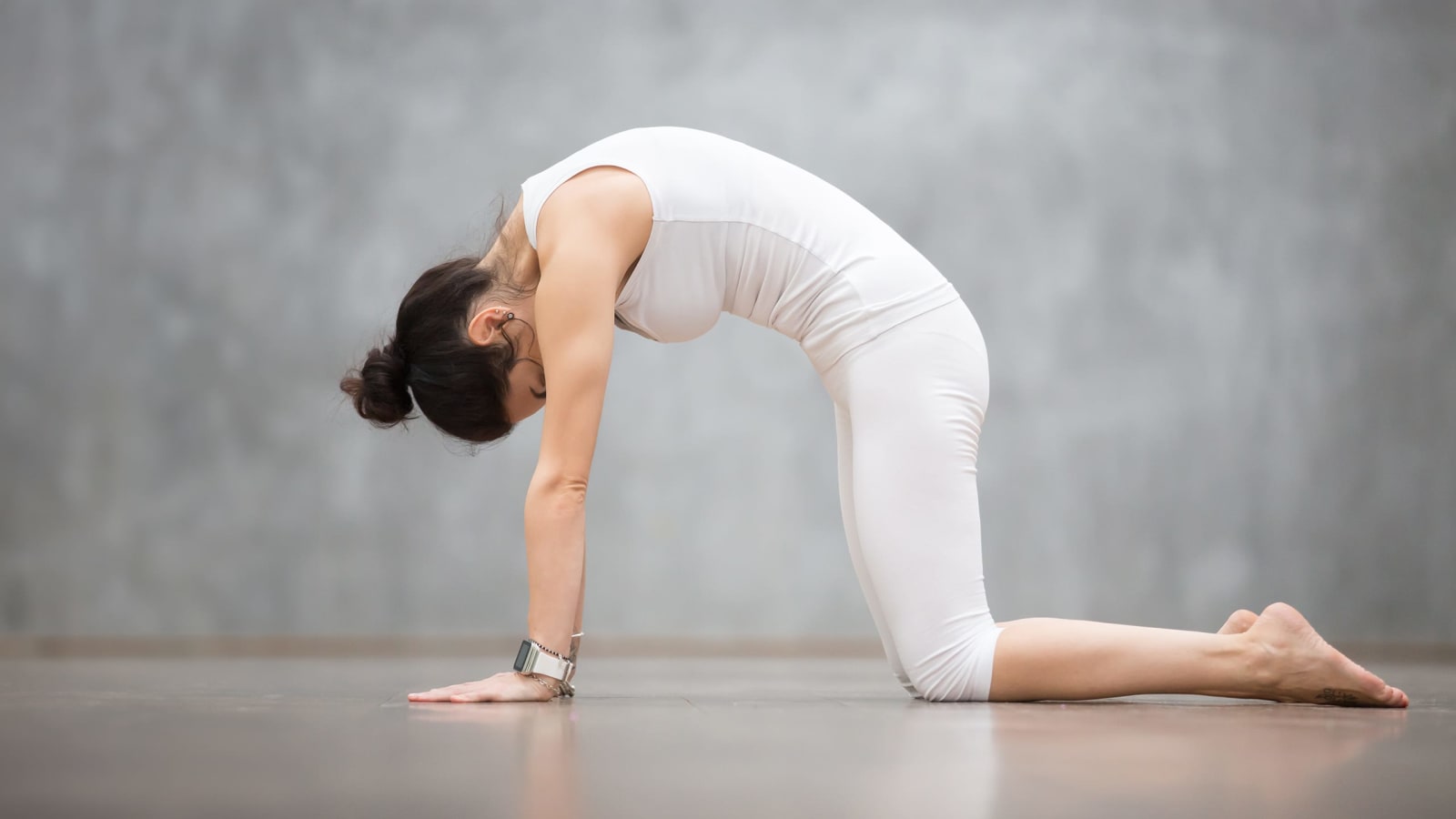
A flexible spine improves rotational power.
How to Perform
Get on your hands and knees
Arch back upward
Then drop it downward
Repeat 10–15 times
Benefits
Improves core mobility
Reduces back stiffness
Helps with quick karate movements
10. Neck Stretch

A relaxed neck helps with fast reaction time.
How to Perform
Tilt head gently side to side
Hold each for 10 seconds
Avoid pulling too hard
Benefits
Relieves tension
Improves posture
Prevents neck injuries
Complete Stretching Routine for Karate (15–20 Minutes)
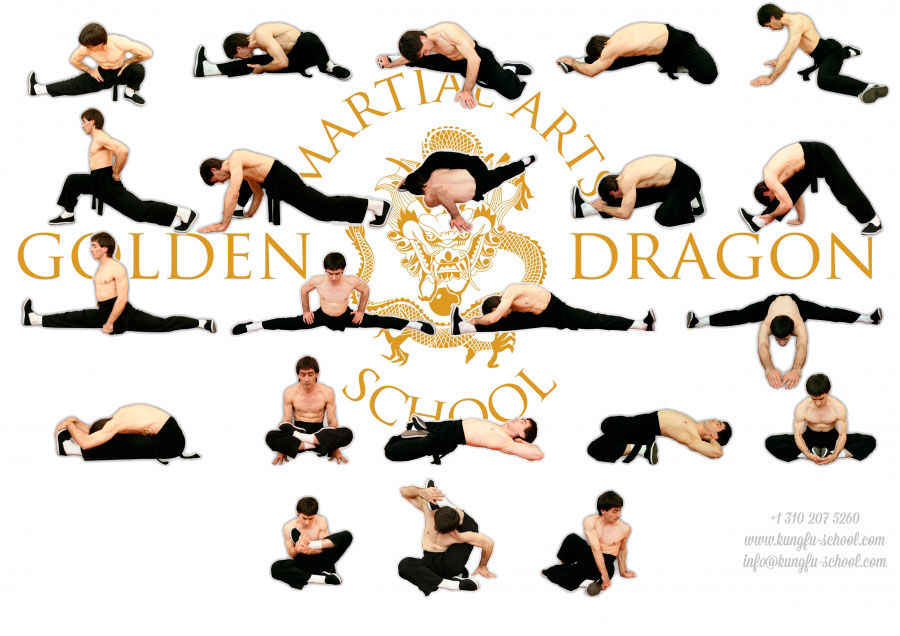
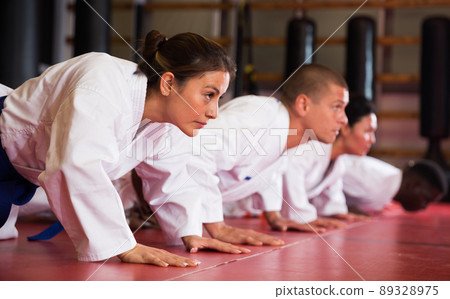
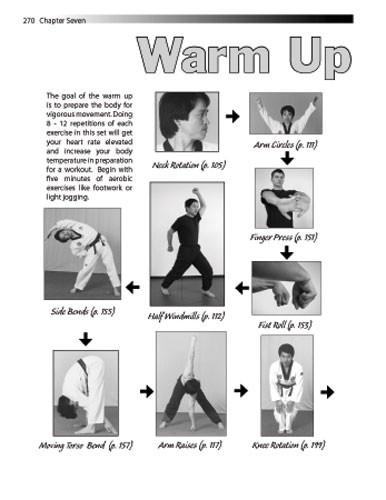
Follow this routine before and after training.
Before Training (Dynamic Stretches – 7 minutes)
Leg swings (20 per leg)
Hip circles (15 each direction)
Arm rotations (20 each side)
Light knee raises (20 reps)
Dynamic front & side kicks (10 per leg)
After Training (Static Stretches – 8–10 minutes)
Butterfly stretch (40 sec)
Hamstring stretch (each leg 30–40 sec)
Side split stretch (30–40 sec)
Hip flexor stretch (30 sec each side)
Calf stretch (30 sec)
Neck and back stretch (20–30 sec)
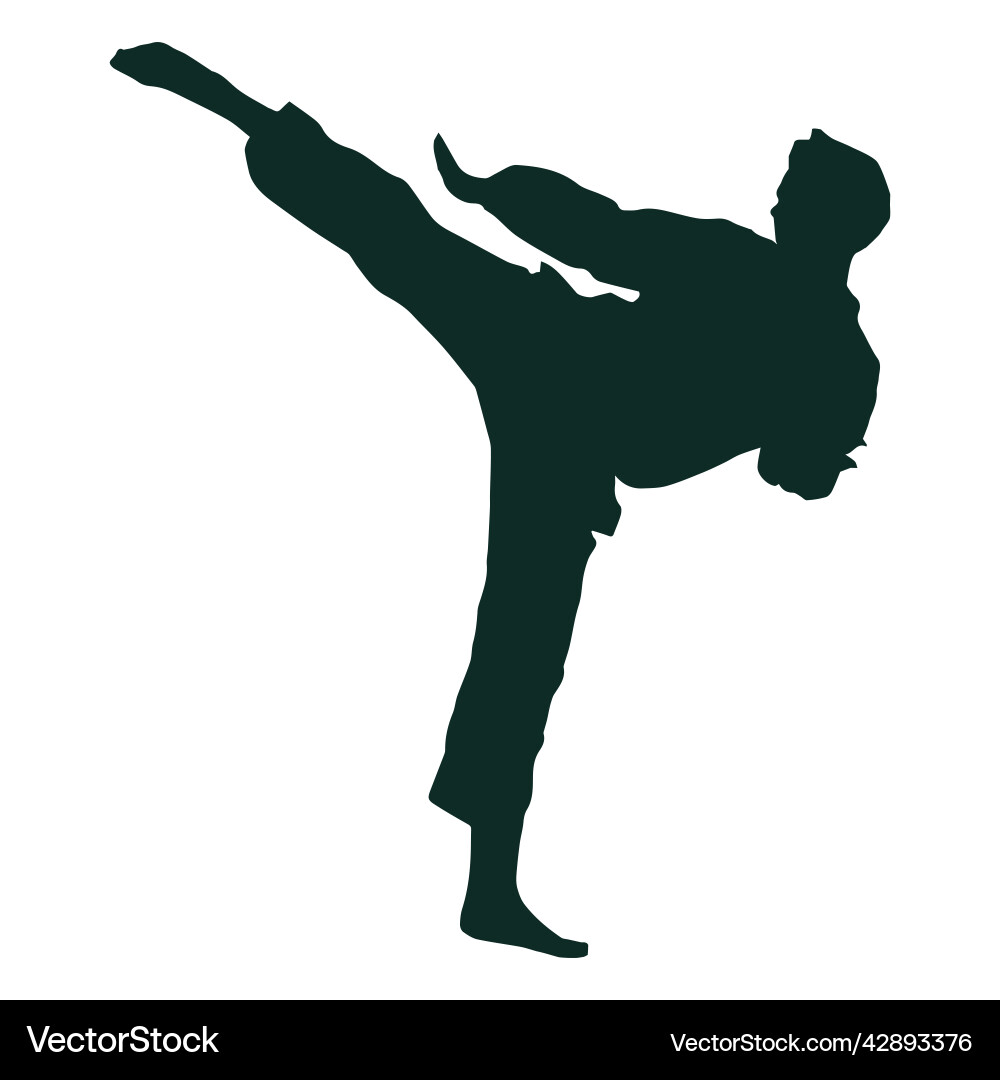
How Stretching Improves Karate Performance
1. Higher Kicks with Less Effort
Flexible muscles allow kicks to rise smoothly without strain.
2. Faster Hip Rotation
Flexibility improves your power in techniques like Mawashi Geri, Ushiro Geri, and Yoko Geri.
3. Stronger Stances
Deep and stable stances give you better control in Kihon, Kata, and Kumite.
4. Reduced Risk of Injury
Flexible muscles handle stress better.
5. Better Overall Body Movement
Your Karate becomes smoother and more powerful.
Tips for Safe Stretching in Karate
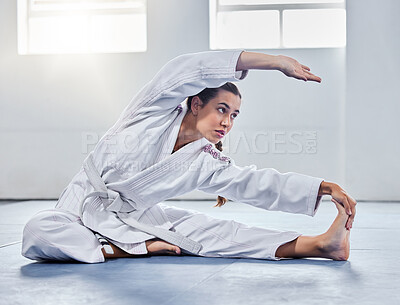
Never bounce during static stretches
Warm up for 5 minutes before stretching
Stretch both sides equally
Breathe deeply to relax muscles
Do not force splits or high kicks
Progress slowly to avoid injury
Common Mistakes Karateka Make While Stretching
Stretching on cold muscles
Ignoring breathing
Overstretching before sparring
Skipping cool-down stretches
Training kicks without hip mobility
Avoiding these mistakes improves training efficiency and reduces discomfort.
Conclusion
Stretching is one of the most powerful tools for elevating your Karate performance. Whether you want higher kicks, stronger stances, faster movement, or reduced injury risk, a disciplined stretching routine is essential. By practicing the exercises in this guide consistently, you will see major improvements in flexibility, mobility, and technique.
A flexible body supports a stronger, sharper, and more effective karateka.


0 Comments
Post a Comment